














Memory foam and hybrid are the two most popular mattress types today, and they feel noticeably different. Memory foam contours closely to your body, creating a "hugged" sensation with deep pressure relief. Hybrids combine foam comfort layers with a coil support core, offering contouring plus responsiveness, airflow, and edge support. This guide compares them across the factors that matter most so you can decide which feel fits you. For a broader overview of all mattress types, see our types of mattresses guide.
Contouring and Pressure Relief
Memory foam is the champion of contouring. It responds to body heat and pressure, slowly molding to your shape. This creates even pressure distribution across your body, which is why memory foam is often recommended for side sleepers whose shoulders and hips need to sink into the mattress.
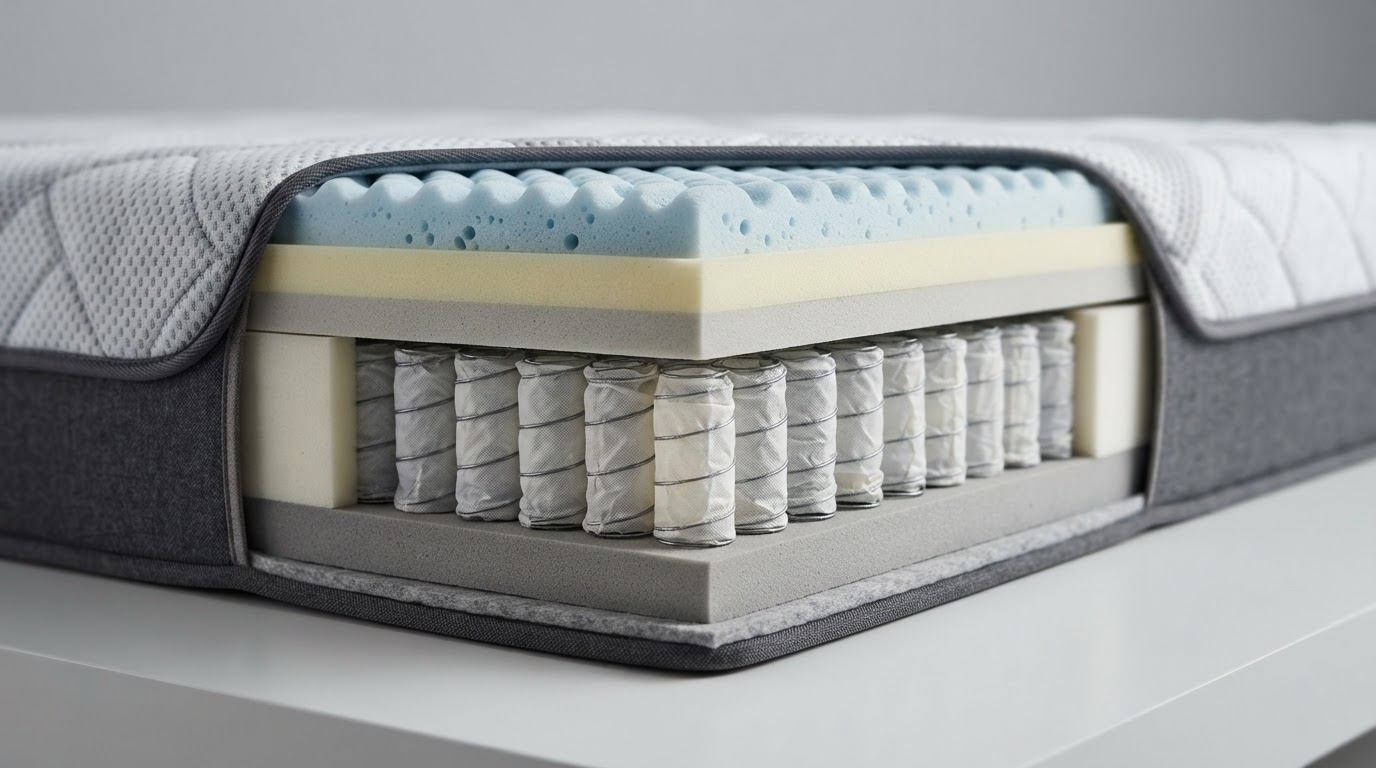
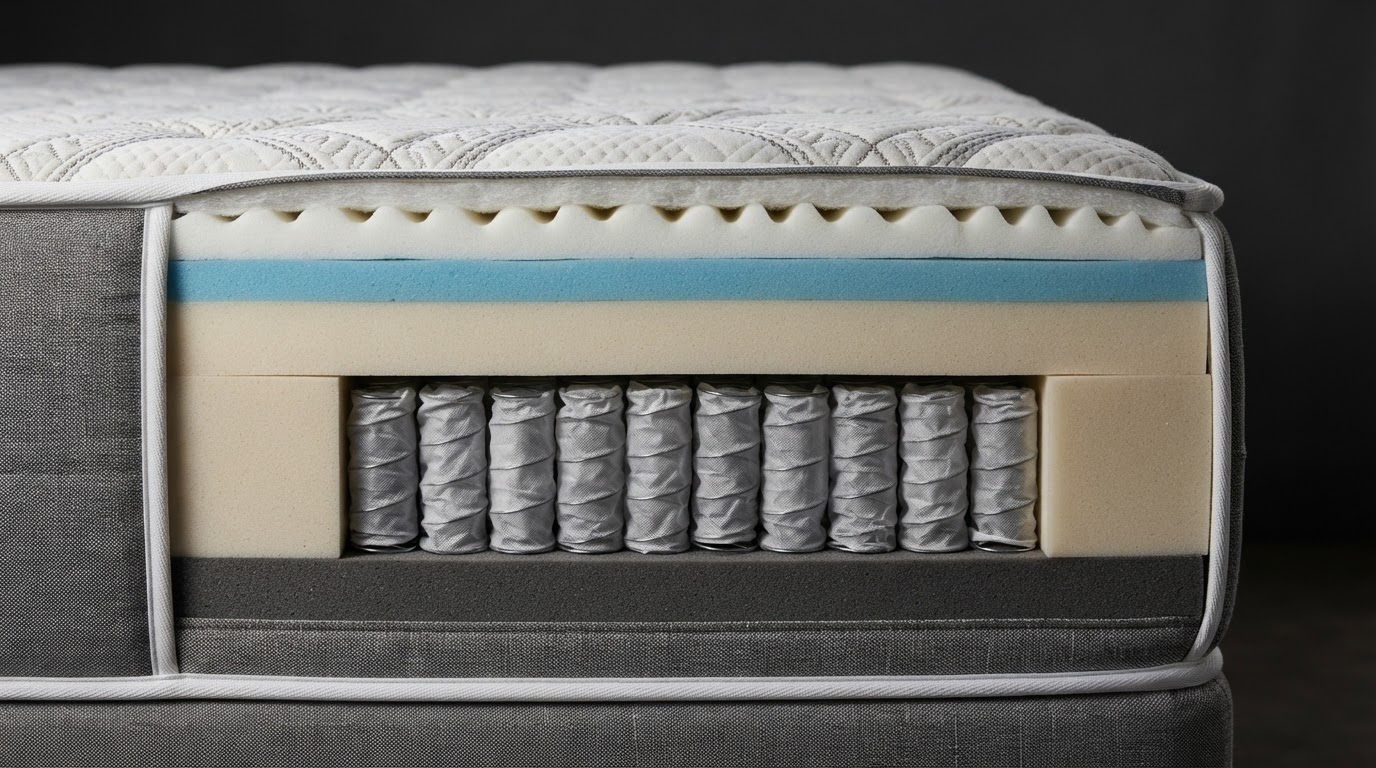
Hybrids also contour, but less deeply. The foam comfort layers on top of the coils provide cushioning and pressure relief, but the coil core beneath is more responsive — it pushes back rather than molding around you. The result is a feel that balances contouring with support.
| Factor | Memory Foam | Hybrid |
|---|---|---|
| Contouring depth | Deep, close hug | Moderate, balanced |
| Pressure relief | Excellent | Very good |
| Motion isolation | Excellent | Good (pocketed coils help) |
Responsiveness and Movement
Memory foam is slow to respond. When you move, the foam takes a moment to adjust to your new position. Some sleepers find this comfortable — the mattress seems to "embrace" you. Others find it restrictive, as if it is hard to change positions or get out of bed.
Hybrids are more responsive. The coils push back quickly, so the mattress adjusts immediately when you move. This makes hybrids feel more "alive" and easier to move on, which combination sleepers and active sleepers tend to prefer.
Airflow and Temperature
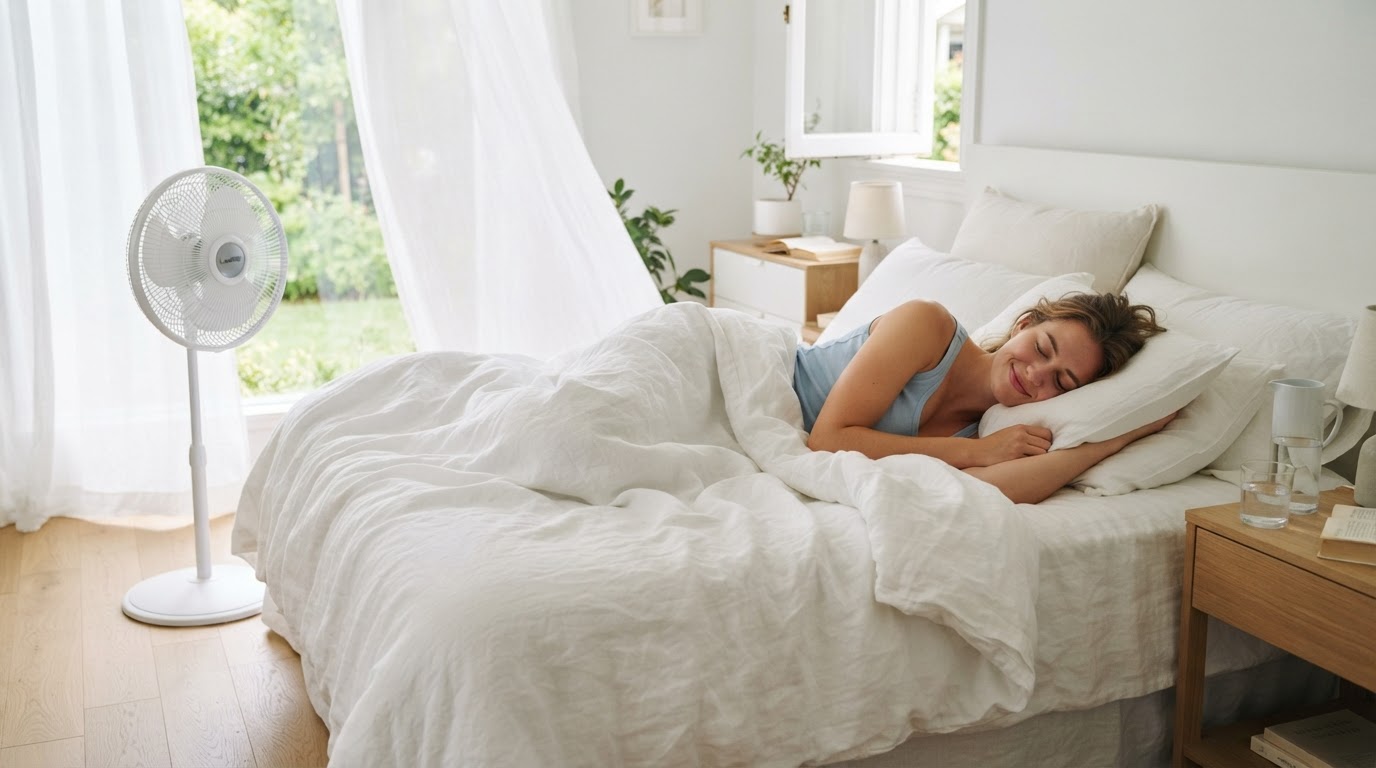
This is where hybrids have a clear advantage. The coil core in a hybrid creates an open air channel that runs through the mattress, allowing heat to dissipate. Memory foam, even gel-infused, is a dense material that traps more heat.
If you sleep hot, a hybrid is almost always the better choice. For more on cooling, see our cooling mattress guide.
Edge Support
Hybrids typically have better edge support than all-foam mattresses. The coil system, especially with reinforced edge coils or a foam encasement, keeps the perimeter firm and supportive. This makes the full surface of the mattress usable and makes sitting on the edge comfortable.
All-foam mattresses tend to have weaker edges. The foam compresses under weight, and sitting on the edge can feel like you are sliding off. Some foam mattresses add high-density foam rails around the perimeter to improve this, but they still generally do not match coil-based edge support.
What to Test or Ask in a Showroom
- ›Lie on a memory foam and a hybrid mattress side by side for at least 10 minutes each.
- ›Roll from your back to your side to compare how easily you can change positions.
- ›Sit on the edge of each to compare edge support.
- ›Ask about the foam density and coil count in each model.
- ›If you sleep with a partner, have them move while you lie still to compare motion isolation.
Which Feel Fits You?
Choose memory foam if you:
- Want deep contouring and a "hugged" feel
- Are a side sleeper who needs pressure relief at shoulders and hips
- Share a bed and want maximum motion isolation
- Do not sleep hot
Choose a hybrid if you:
- Want a balance of contouring and responsiveness
- Sleep hot and want better airflow
- Want strong edge support
- Are a combination sleeper who changes positions
- Prefer a more traditional mattress feel with modern comfort
Ready to compare in person? Browse memory foam or hybrid mattresses, or visit a showroom near you to feel the difference yourself.
Sources and Review Standards
This guide was reviewed by the Metro Mattress of Georgia Sleep Team for accuracy. Sources consulted:
Ready to Find Your Mattress?
Visit a Metro Mattress of Georgia showroom to compare brands, test comfort levels, and talk with a Sleep Pro — no pressure, just honest guidance.