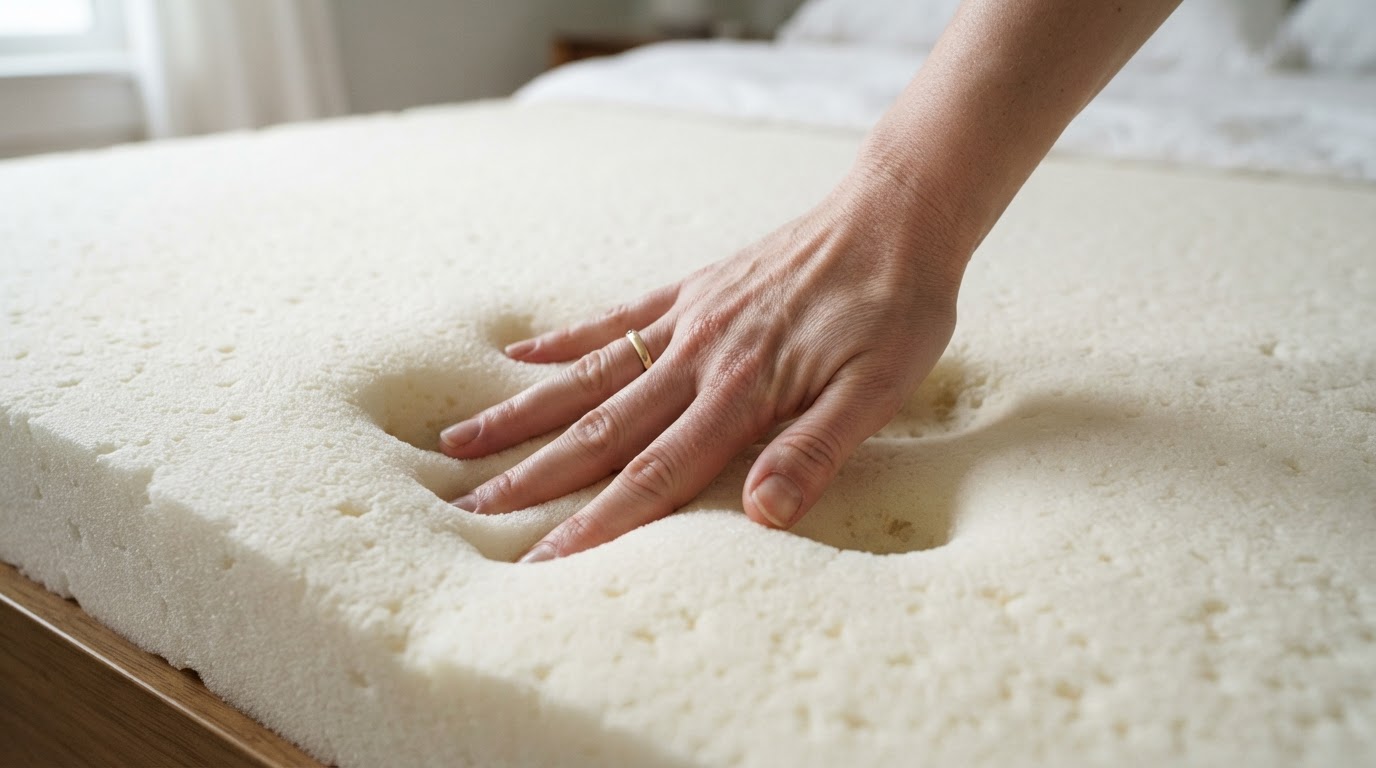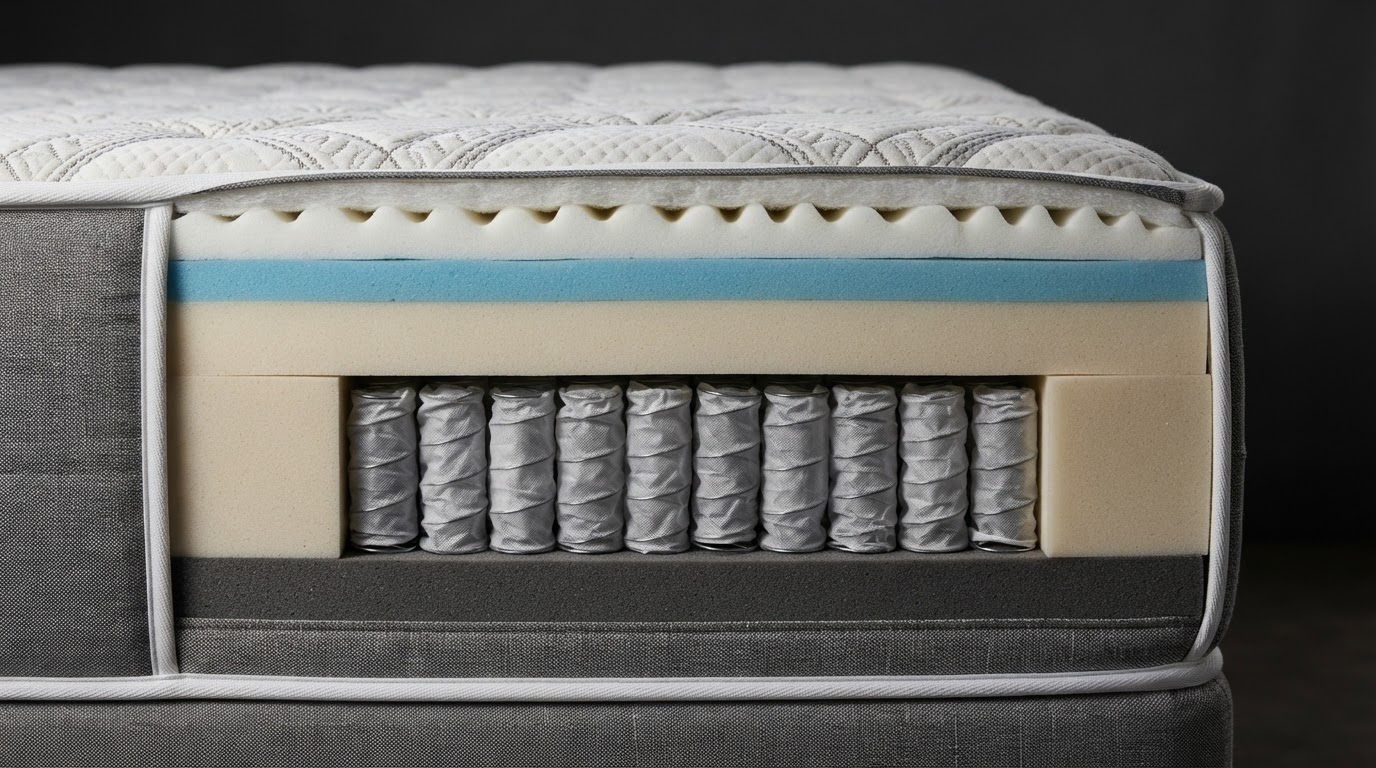
















Innerspring and hybrid mattresses both use coil systems, but they feel and perform differently. A traditional innerspring uses coils as both the support and the comfort layer, with minimal padding on top. A hybrid adds thicker foam or latex comfort layers over the coils, combining the airflow and support of springs with the contouring of foam. This guide breaks down the key differences to help you choose. For a broader overview, see our types of mattresses guide.
Support Systems Compared
Both innerspring and hybrid mattresses use coil systems for support, but the coil types differ:
| Coil Type | Found In | Characteristics |
|---|---|---|
| Bonnell coils | Traditional innerspring | Hourglass shape, interconnected, bouncy, transfers motion |
| Continuous wire | Traditional innerspring | Single wire formed into coils, durable, transfers motion |
| Offset coils | Mid-range innerspring | Hinged design, contours slightly better than Bonnell |
| Pocketed coils | Hybrids, premium innersprings | Individually wrapped, isolates motion, contours well |
Hybrids almost always use pocketed coils because they provide the contouring and motion isolation that complements the foam comfort layers. Traditional innersprings may use any coil type.
Comfort Layers
This is the biggest difference between the two. Traditional innersprings have thin comfort layers — usually less than 2 inches of foam or fiber padding — over the coils. The coils are the primary comfort layer, which is why innersprings feel firm and bouncy.
Hybrids have thicker comfort layers — typically 2–4 inches of memory foam, latex, or polyfoam — over the coils. This foam provides contouring, pressure relief, and a softer surface feel, while the coils beneath provide support and airflow. The result is a mattress that cushions without bottoming out.
Motion and Bounce
Traditional innersprings with interconnected coils transfer motion across the mattress. If your partner moves, you will feel it. They also have more bounce, which some sleepers prefer but which can be disruptive for couples.
Hybrids with pocketed coils isolate motion well. Each coil moves independently, so movement on one side of the bed does not transfer to the other. This makes hybrids a better choice for couples. For more on this topic, see our couples mattress guide.
Airflow and Temperature
Both innerspring and hybrid mattresses sleep cooler than all-foam mattresses because the coil core allows air to circulate. Traditional innersprings may have slightly more airflow because there is less foam to restrict air movement, but the difference is small.
If cooling is a priority, either type is a good choice. For more on cooling, see our cooling guide.
What to Test or Ask in a Showroom
- ›Lie on both an innerspring and a hybrid to feel the difference in contouring.
- ›Have a partner move while you lie still to compare motion transfer.
- ›Sit on the edge of each to compare edge support.
- ›Ask which coil type each mattress uses (Bonnell, continuous, offset, or pocketed).
- ›Compare prices — innersprings are typically more affordable than hybrids.
Value and Maintenance
Traditional innersprings are generally more affordable than hybrids, making them a good value for budget-conscious shoppers. They are also simple in construction, which means fewer components that can wear out.
Hybrids cost more because of the additional foam comfort layers, but they offer better pressure relief and contouring. Both types should be rotated regularly to prevent uneven wear. For maintenance tips, see our mattress care guide.
Ready to compare in person? Browse innerspring or hybrid mattresses, or visit a showroom near you.
Sources and Review Standards
This guide was reviewed by the Metro Mattress of Georgia Sleep Team for accuracy. Sources consulted:
Ready to Find Your Mattress?
Visit a Metro Mattress of Georgia showroom to compare brands, test comfort levels, and talk with a Sleep Pro — no pressure, just honest guidance.