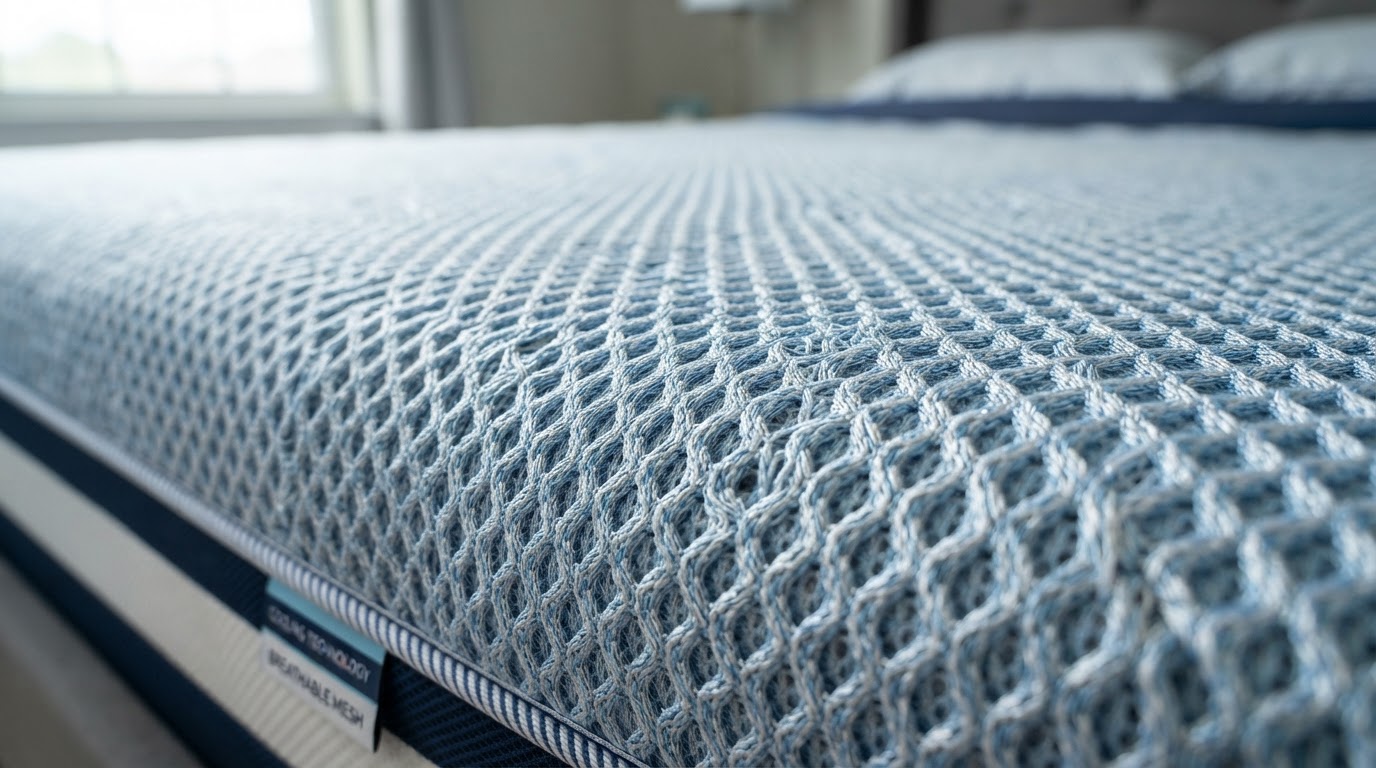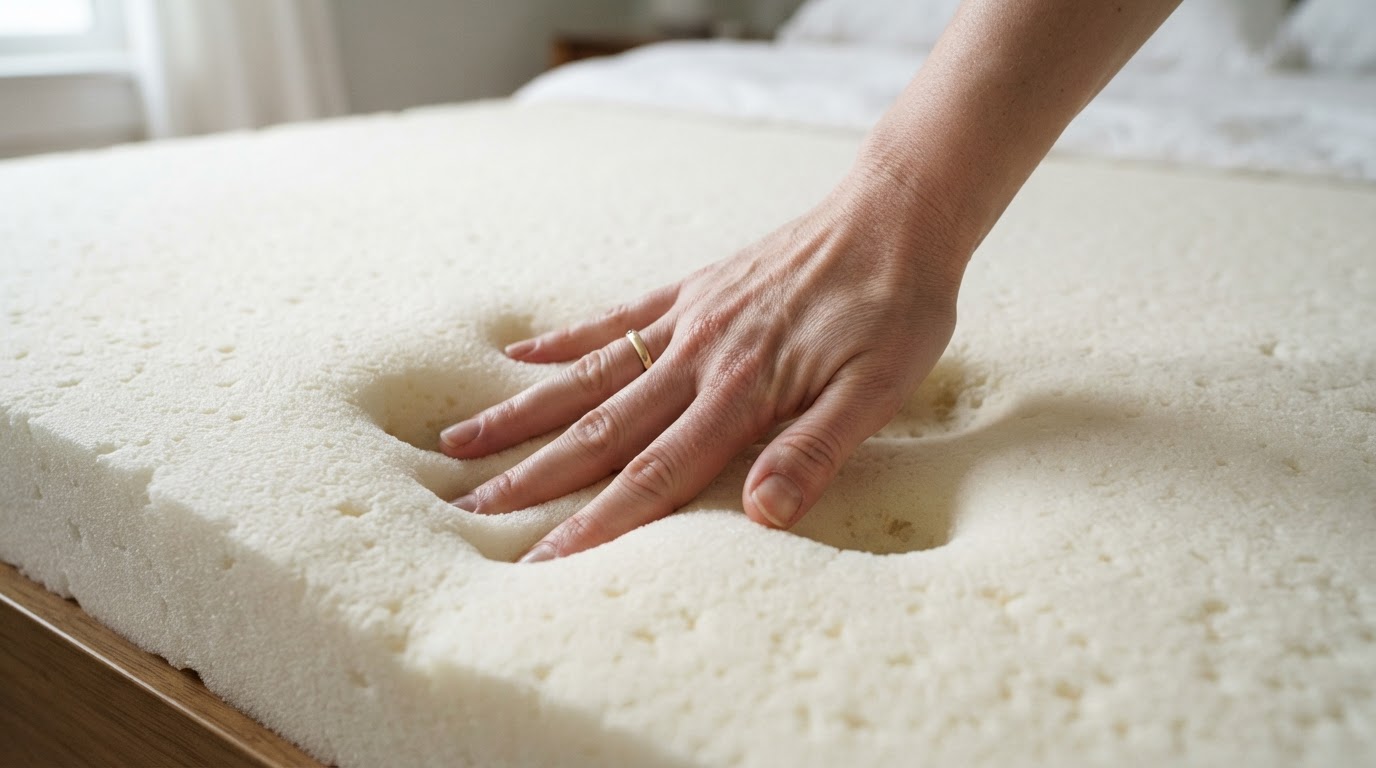
















If you wake up sweating, flipping your pillow, or kicking off the blankets, your mattress may be part of the problem. Some materials trap heat; others allow it to dissipate. This guide explains what actually keeps a mattress cool, which materials and constructions work best, and how to evaluate cooling claims so you do not waste money on marketing hype. For a deeper look at the technology behind cooling foams and covers, read our cooling technology guide.
What Actually Keeps a Mattress Cool
Cooling is not about one magic material. It is about how well the mattress moves heat away from your body and allows air to circulate. The three mechanisms that matter are:
- Airflow. Coil systems and open-cell foams allow air to move through the mattress, carrying heat away. This is the most effective cooling mechanism.
- Heat conduction. Materials like gel, graphite, and copper draw heat away from the body and distribute it through the foam or cover.
- Moisture wicking. Breathable covers and sheets pull sweat away from the skin so it can evaporate, which is how the body naturally cools itself.
Cooling Materials Compared
| Material | Cooling Effectiveness | How It Works |
|---|---|---|
| Coils (hybrid/innerspring) | Excellent | Open structure allows continuous airflow |
| Latex | Very Good | Naturally breathable; open-cell structure |
| Open-cell foam | Good | Internal air channels improve ventilation vs. traditional foam |
| Gel-infused foam | Moderate | Gel beads conduct heat away from the body |
| Copper-infused foam | Moderate | Copper particles draw heat away; also antimicrobial |
| Traditional memory foam | Poor | Dense structure traps body heat |
Construction and Airflow
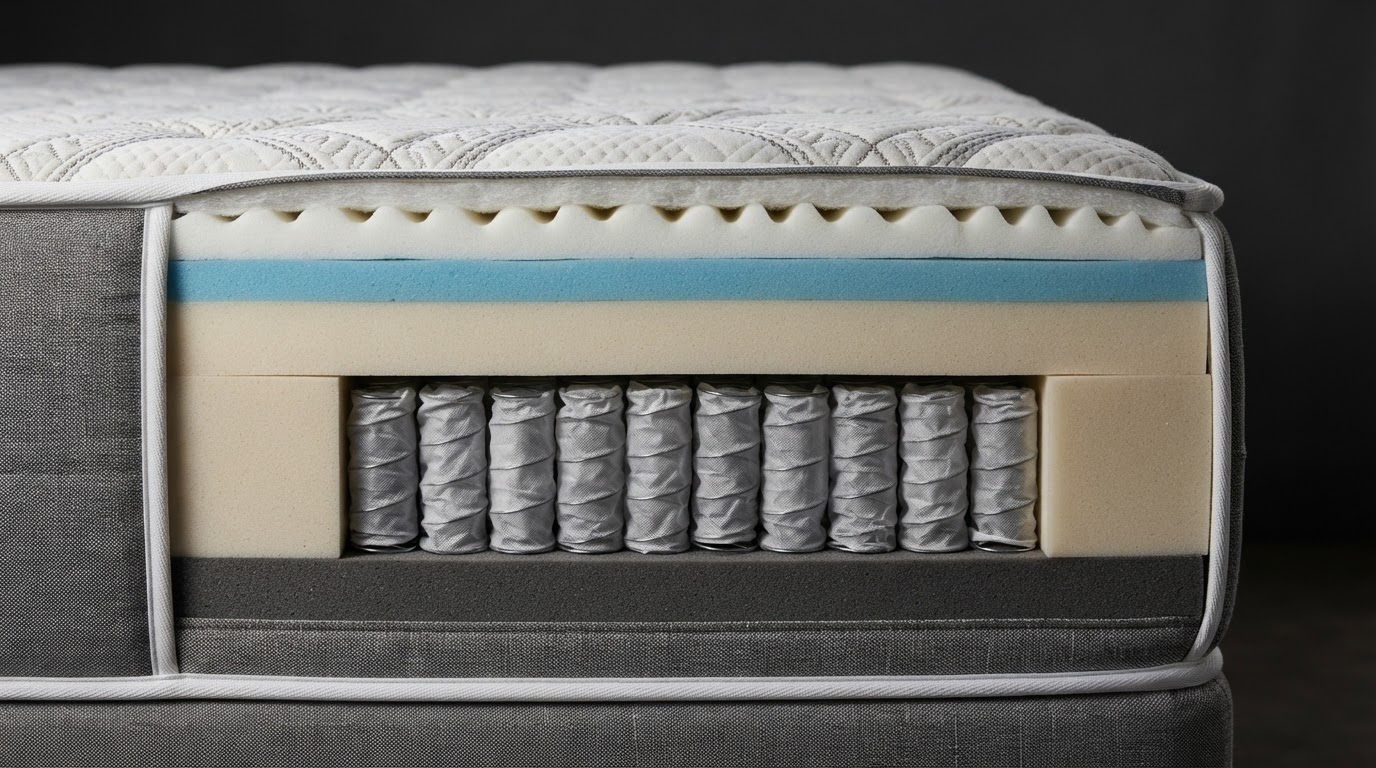
The overall construction matters more than any single cooling feature. A hybrid mattress with a coil support system will almost always sleep cooler than an all-foam mattress, even if the foam is gel-infused. That is because the coil core creates an open air channel that runs the full depth of the mattress.
Within the comfort layers, thinner is cooler. A mattress with 2–3 inches of foam over coils sleeps cooler than one with 6 inches of foam over coils, because there is less insulating material between your body and the airflow below.
For a comparison of foam and hybrid construction, see our memory foam vs. hybrid guide.
Beyond the Mattress
Even the best cooling mattress cannot overcome a hot environment. To maximize cooling, address the full sleep setup:
- Room temperature. The ideal sleeping temperature is 60–67°F. A cool room is the single most effective cooling strategy.
- Sheets. Breathable cotton, bamboo, or percale weave sheets allow air circulation. Avoid flannel and heavy microfiber.
- Pillow. Your head generates significant heat. A cooling gel or breathable latex pillow helps. Browse cooling pillows in our accessories.
- Mattress protector. Choose a breathable protector, not a vinyl waterproof one. Some protectors are designed specifically for airflow.
- Airflow. A ceiling fan or bedside fan keeps air moving, which helps sweat evaporate.
What to Test or Ask in a Showroom
- ›Lie on the mattress for at least 10 minutes — surface coolness fades as body heat builds.
- ›Ask which models have coil airflow vs. solid foam construction.
- ›Check whether the cover uses phase-change or breathable materials.
- ›Ask about gel-infused, copper-infused, or open-cell foam options.
- ›Compare a hybrid and a memory foam mattress side by side to feel the temperature difference.
How to Evaluate Cooling Claims
Cooling is one of the most heavily marketed mattress features, and not all claims are equal. Here is how to cut through the noise:
- "Cooling cover" is not the same as a cooling mattress. A phase-change cover feels cool to the touch initially but warms up within minutes. It helps, but it is not the whole story.
- "Gel foam" alone is not enough. Gel-infused foam is cooler than traditional foam but still warmer than a hybrid with coils. If you sleep very hot, prioritize construction over foam additives.
- Look for airflow, not just materials. The best cooling mattresses combine breathable covers, conductive foams, and coil airflow. No single feature does the job alone.
- Test in person. A showroom test reveals how the mattress feels after 10 minutes of body heat — something online descriptions cannot convey.
Ready to find a cooler mattress? Browse our catalog or visit a showroom near you to test cooling models in person.
Sources and Review Standards
This guide was reviewed by the Metro Mattress of Georgia Sleep Team for accuracy. Sources consulted:
Ready to Find Your Mattress?
Visit a Metro Mattress of Georgia showroom to compare brands, test comfort levels, and talk with a Sleep Pro — no pressure, just honest guidance.