















Walk into any mattress showroom and you will see dozens of beds that all look similar from a distance. But underneath the cover, the construction determines how the mattress feels, how long it lasts, and which sleeper it suits best. This guide explains the four main mattress types — memory foam, innerspring, hybrid, and latex — so you can narrow down your options before you test them in person at a Metro Mattress of Georgia showroom.
Memory Foam
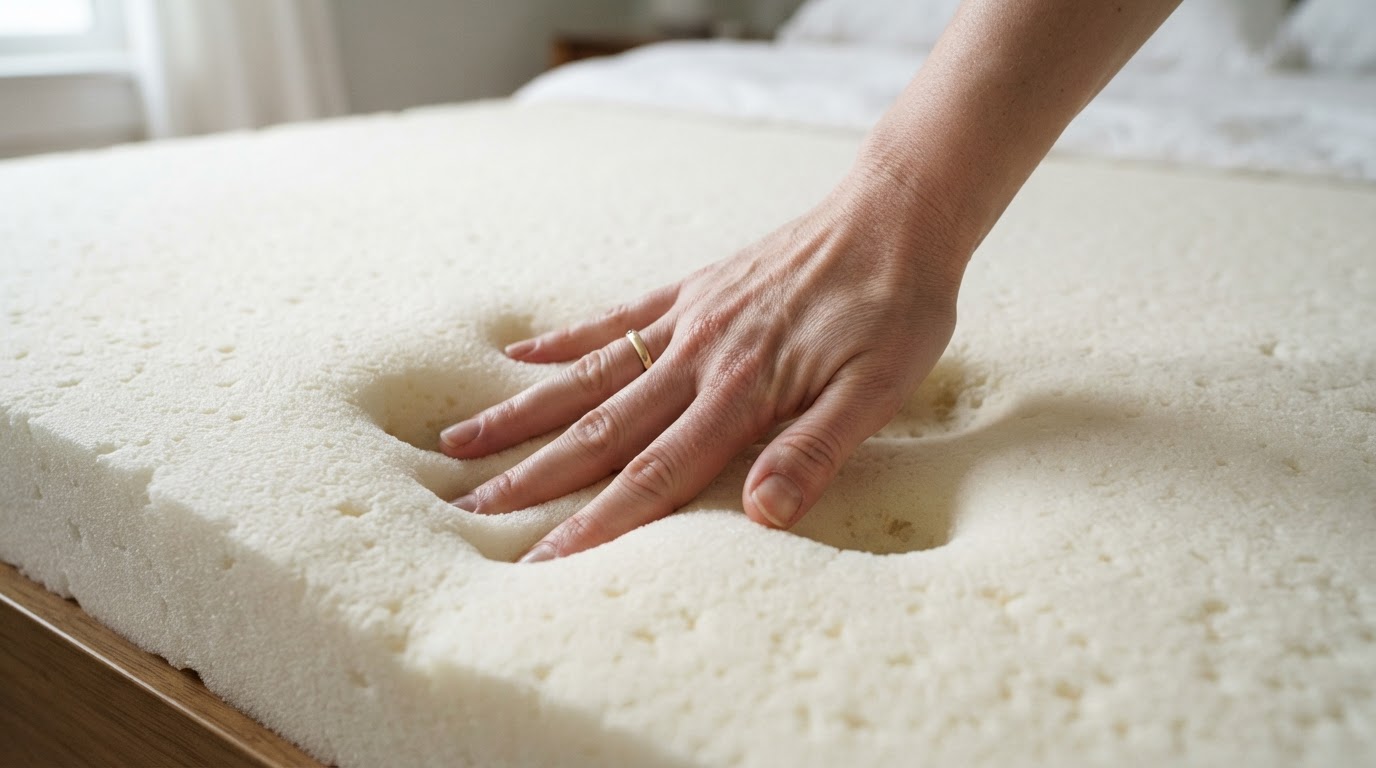
Memory foam is a viscoelastic polyurethane foam that softens in response to body heat and pressure. When you lie down, the foam slowly contours around your body, filling in the gaps under your lower back, shoulders, and hips. This creates a distinctive "hug" feel that many side sleepers and pressure-sensitive sleepers love.
Pros
- Excellent pressure relief for shoulders and hips
- Superior motion isolation — you will not feel a partner moving
- Quiet with no squeaky coils
- Available in a wide range of firmness levels
Cons
- Can trap body heat, though cooling covers and gel infusions help
- Slow response may feel like you are "stuck" when rolling over
- Some sleepers find the deep contouring claustrophobic
- Off-gassing odor when new, typically dissipating in a few days
Memory foam is ideal for side sleepers who need contouring, couples who want motion isolation, and anyone who likes the feeling of being cradled by their mattress.
Innerspring
Innerspring mattresses use a network of steel coils as both the support core and the primary comfort layer, topped with thin padding or a quilted cover. They are the oldest and most familiar mattress type, and they tend to be the most affordable.
Pros
- Most affordable mattress type
- Highly breathable — coils allow maximum airflow
- Bouncy, responsive surface that is easy to move on
- Familiar, traditional feel that many sleepers prefer
Cons
- Transfers motion — you will feel a partner tossing and turning
- Less contouring and pressure relief than foam or hybrid
- Shorter lifespan than foam, hybrid, or latex
- Can develop squeaks over time
Innerspring mattresses work well for budget shoppers, stomach sleepers who want a firm surface, and hot sleepers who prioritize airflow. For a deeper look at how innersprings compare to hybrids, see our Innerspring vs. Hybrid guide.
Hybrid
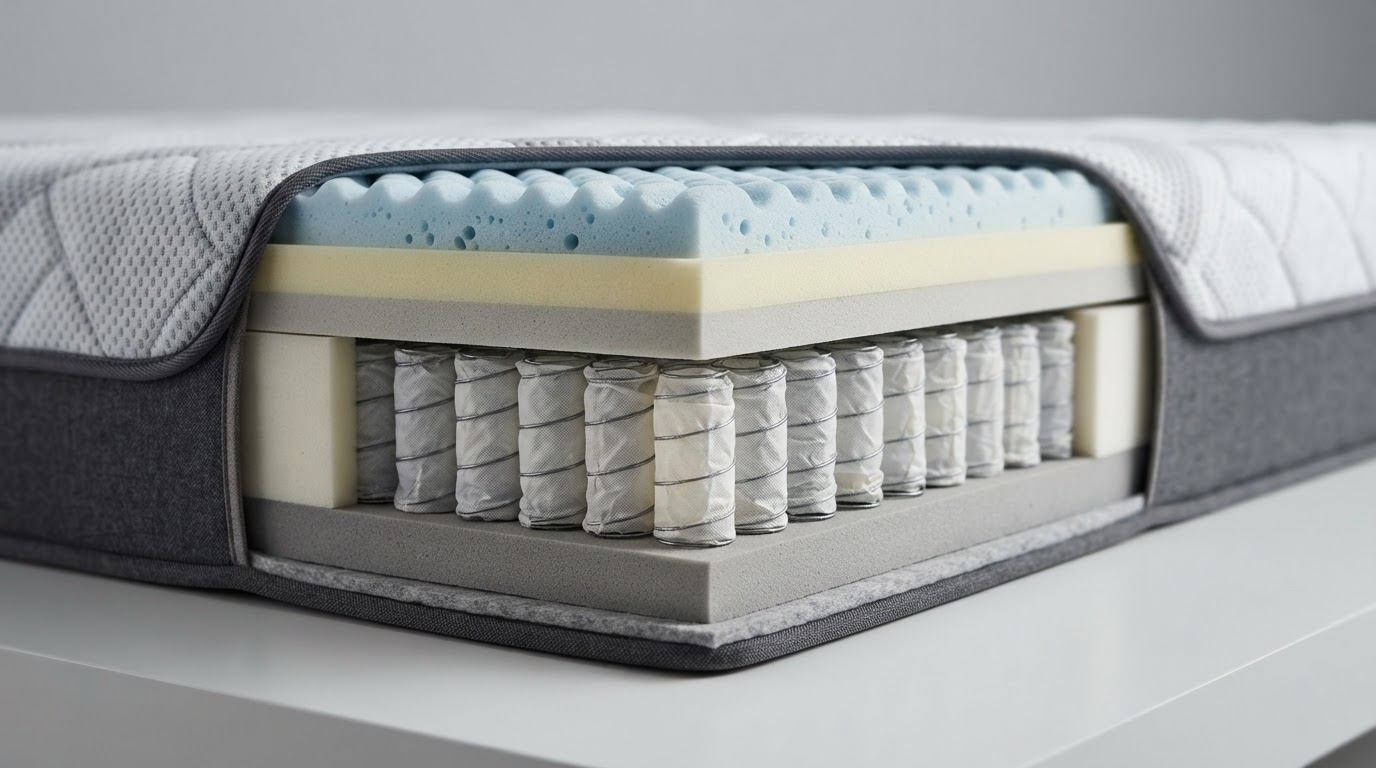
Hybrid mattresses combine a pocketed coil support core with foam or latex comfort layers on top. The coils provide bounce, airflow, and deep support, while the foam layers add contouring, pressure relief, and motion isolation. This combination makes hybrids the most versatile mattress type — they work for nearly every sleep position and body type.
Pros
- Balanced feel: contouring without the "stuck" feeling of all-foam
- Better airflow than all-foam thanks to the coil core
- Good motion isolation, especially with pocketed coils
- Strong edge support compared to all-foam mattresses
- Available from most major brands at Metro Mattress
Cons
- More expensive than basic innerspring
- Heavier and harder to move
- Quality varies widely — a cheap hybrid can feel worse than a good innerspring
Hybrids suit most sleepers and are the most popular choice at Metro Mattress of Georgia. If you are deciding between foam and hybrid, our Memory Foam vs. Hybrid guide compares them side by side.
Latex
Latex mattresses are made from natural or synthetic latex foam. Natural latex is derived from rubber trees and is prized for its durability, breathability, and responsive, springy feel. Latex contours like memory foam but bounces back much faster, so you do not get the slow-motion "stuck" sensation.
Pros
- Most durable foam type — often lasting 10–15 years
- Highly breathable and naturally cooling
- Responsive, springy feel that is easy to move on
- Resistant to body impressions and sagging
- Naturally hypoallergenic and dust-mite resistant
Cons
- Most expensive mattress type
- Heavier than other foam options
- Less contouring than memory foam
- Some people are sensitive to latex — check before buying
Quick Comparison
| Feature | Memory Foam | Innerspring | Hybrid | Latex |
|---|---|---|---|---|
| Pressure Relief | Excellent | Fair | Good | Good |
| Cooling | Fair | Excellent | Good | Good |
| Motion Isolation | Excellent | Poor | Good | Good |
| Durability | 7–10 yrs | 5–7 yrs | 7–10 yrs | 10–15 yrs |
| Price | $$ | $ | $$ | $$$ |
| Best For | Side sleepers | Budget, stomach | Most sleepers | Durability, eco |
Which Type Is Right for You?
- Choose memory foam if you are a side sleeper, you want maximum pressure relief, or your partner moves a lot at night.
- Choose innerspring if you are on a tight budget, you sleep hot, or you prefer a traditional, bouncy feel.
- Choose hybrid if you want the best of both worlds — contouring and airflow, pressure relief and bounce. This is the safest choice if you are unsure.
- Choose latex if you want maximum durability, natural materials, and a responsive feel that does not trap heat.
What to Test or Ask in a Showroom
- ›Lie on each type for at least 5 minutes in your usual sleep position.
- ›Compare a foam and a hybrid side by side to feel the difference in responsiveness.
- ›Ask the Sleep Team which models offer cooling covers if temperature is a priority.
- ›Test the edge by sitting on it — hybrids and latex typically have better edge support.
- ›If you sleep with a partner, have them switch positions while you lie still.
The best way to understand the difference between mattress types is to feel them. Browse our catalog or visit a showroom to compare memory foam, innerspring, hybrid, and latex mattresses in person. Our Sleep Team will help you identify which type matches your body, budget, and sleep style.
Sources and Review Standards
This guide was reviewed by the Metro Mattress of Georgia Sleep Team for accuracy. Sources consulted:
Ready to Find Your Mattress?
Visit a Metro Mattress of Georgia showroom to compare brands, test comfort levels, and talk with a Sleep Pro — no pressure, just honest guidance.