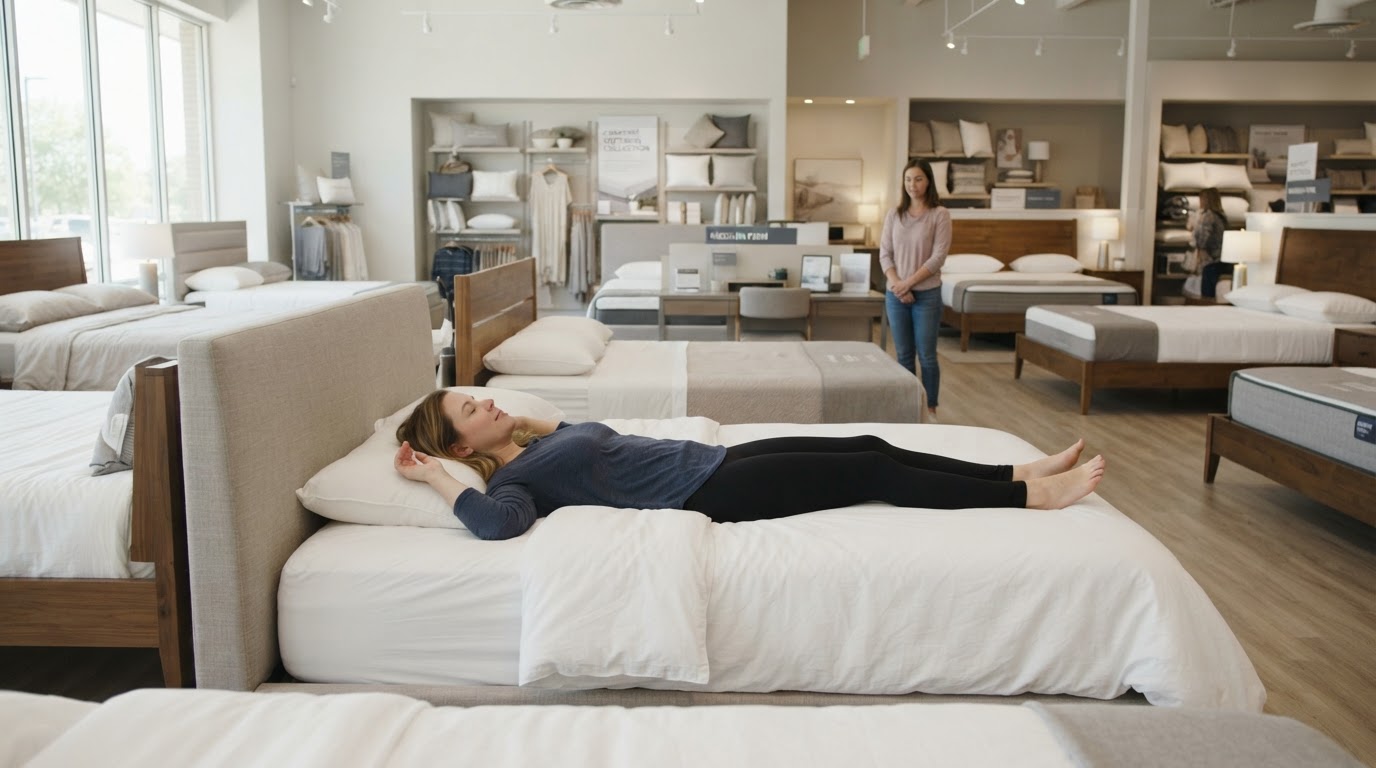
















A mattress can influence how your back feels by affecting spinal alignment and pressure distribution during sleep. But back discomfort is complex, with many potential causes — sleep position, pillow height, activity level, underlying conditions, and more. This guide explains how mattress factors like support, firmness, and pressure relief interact with back comfort, how to test mattresses in a showroom, and when to consult a healthcare professional. It does not offer medical advice or claim that any mattress treats, prevents, or cures back pain.
Spinal Alignment and Support
The core function of a mattress is to keep your spine in a neutral position while you sleep. "Neutral" means your spine maintains its natural curves — not flattened, not arched, not twisted. When the spine is neutral, the muscles around it can relax, and pressure is distributed evenly across your body.
A mattress that is too soft lets heavier parts of your body (hips, shoulders) sink too far, throwing the spine out of alignment. A mattress that is too firm creates gaps — particularly under the lower back for back sleepers or under the shoulders for side sleepers — leaving those areas unsupported. The right mattress fills in the curves of your body without letting any single area sink too deeply.
Firmness and Back Comfort
Firmness and support are not the same thing. Firmness describes how the surface feels — soft, medium, or firm. Support describes how well the mattress maintains spinal alignment. A soft mattress can be supportive if it has a strong core. A firm mattress can lack support if the coils are weak.
Research on mattress firmness and back discomfort suggests that medium-firm mattresses tend to work well for many people, but individual results vary. The right firmness depends on your sleep position and body type. For more detail, read our firmness guide.
How Sleep Position Affects the Back
| Sleep Position | Alignment Challenge | Firmness Tendency |
|---|---|---|
| Back | Lower back gap if too firm; hips sink if too soft | Medium to medium-firm (6–7) |
| Side | Shoulders and hips need to sink; spine can bow if too soft or too firm | Soft to medium (4–6) |
| Stomach | Hips sink, arching the lower back | Firm (7–8) |
For more on how sleep position affects mattress choice, see our sleep position guide.
Pillow Support
Your pillow is part of your sleep support system. A mattress can be perfect, but if your pillow is the wrong height, your neck will be misaligned, which can contribute to upper back and neck discomfort.
- Side sleepers need a thick pillow (4–6 inches) that fills the gap between the ear and the shoulder.
- Back sleepers need a medium pillow (3–4 inches) that supports the natural curve of the neck without pushing the head forward.
- Stomach sleepers need a thin pillow (1–2 inches) or no pillow to avoid bending the neck backward.
What to Test or Ask in a Showroom
- ›Lie in your actual sleep position for at least 10 minutes per mattress.
- ›Ask a partner or the Sleep Team to check whether your spine looks straight from behind.
- ›Bring your own pillow or use one similar to yours to test neck alignment.
- ›Test at least three mattresses at different firmness levels.
- ›Pay attention to whether you feel pressure at the lower back, shoulders, or hips.
When to See a Healthcare Professional
A mattress can affect comfort, but it cannot diagnose or treat medical conditions. If you experience any of the following, consult a qualified healthcare professional:
- Back discomfort that is severe or worsening
- Discomfort that persists for more than a few weeks
- Pain that radiates down your legs
- Numbness, tingling, or weakness in your legs
- Discomfort following an injury or accident
- Discomfort that disrupts your daily activities or sleep
A healthcare professional can evaluate underlying causes and recommend appropriate treatment. A new mattress may be part of the solution, but it should complement — not replace — professional medical advice.
Ready to test mattresses in person? Visit a Metro Mattress showroom or browse our catalog to compare comfort levels and find the right support for your body.
Sources and Review Standards
This guide was reviewed by the Metro Mattress of Georgia Sleep Team for accuracy. Sources consulted:
Ready to Find Your Mattress?
Visit a Metro Mattress of Georgia showroom to compare brands, test comfort levels, and talk with a Sleep Pro — no pressure, just honest guidance.