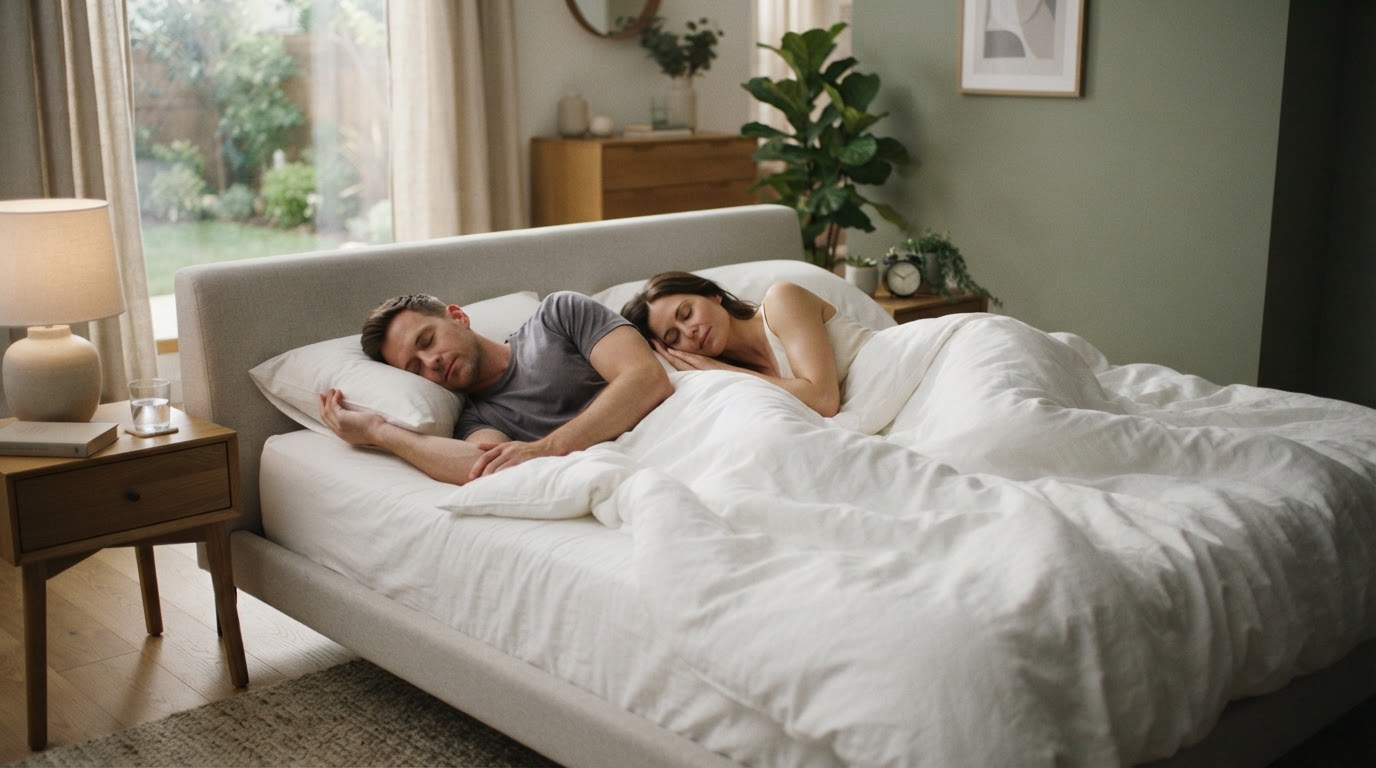
















Your sleep position is one of the most important factors in choosing a mattress. Side, back, stomach, and combination sleepers each have different support and pressure-relief needs. This guide explains what each position requires, why body type and personal preference still matter, and how to test mattresses in a showroom. There is no universal "best" mattress — the right choice depends on how you sleep and how your body feels on different surfaces.
Side Sleepers
Side sleeping is the most common position, and it has specific mattress requirements. When you sleep on your side, your shoulders and hips press into the mattress, while your waist needs support to keep the spine aligned.
Ideal firmness: Soft to medium (4–6 on a 1–10 scale).
Why: A softer mattress allows the shoulders and hips to sink in, which relieves pressure at these points and lets the spine remain straight. A mattress that is too firm creates pressure at the shoulder and hip and leaves the waist unsupported, causing the spine to bow.
Best mattress types: Memory foam and soft hybrids with thick comfort layers. For a deeper look, see our side sleeper guide.
Back Sleepers
Back sleeping is often recommended for spinal alignment because the spine rests in a relatively neutral position. But the mattress still needs to support the lower back's natural curve.
Ideal firmness: Medium to medium-firm (6–7 on a 1–10 scale).
Why: A medium-firm mattress fills in the curve of the lower back without letting the hips sink too far. A mattress that is too firm leaves a gap under the lower back; one that is too soft lets the hips sink, which arches the spine.
Best mattress types: Hybrids, medium-firm memory foam, and latex. Browse our medium comfort mattresses.
Stomach Sleepers
Stomach sleeping is generally not recommended by sleep experts because it can strain the neck and lower back. But if you do sleep on your stomach, the mattress needs to be firm enough to prevent the hips from sinking.
Ideal firmness: Firm (7–8 on a 1–10 scale).
Why: The hips are the heaviest part of the body when stomach sleeping. A firm mattress keeps the hips from sinking, which prevents the lower back from arching. A mattress that is too soft lets the hips sink, creating an uncomfortable arch in the spine.
Best mattress types: Firm hybrids and firm innersprings. Browse our firm mattresses or extra firm mattresses.
Combination Sleepers
Combination sleepers switch between two or more positions during the night. This requires a mattress that adapts to position changes without needing to readjust.
Ideal firmness: Medium (5–7 on a 1–10 scale).
Why: A medium mattress provides enough cushioning for side sleeping and enough support for back and stomach sleeping. Responsiveness is key — the mattress should adjust quickly when you change positions. Memory foam can feel restrictive because it contours slowly, while hybrids and latex are more responsive.
Best mattress types: Hybrids with pocketed coils and responsive comfort layers, or latex mattresses.
Why Body Type and Preference Still Matter
Sleep position is a starting point, not a final answer. Two side sleepers may prefer different firmness levels depending on their body type:
| Body Type | Firmness Adjustment | Why |
|---|---|---|
| Lighter (under 130 lbs) | Softer than average | Less weight compresses the mattress less; need softer foam to contour |
| Average (130–230 lbs) | Standard for the position | Most mattresses are designed for this range |
| Heavier (over 230 lbs) | Firmer than average | More weight compresses the mattress more; need firmer support |
For heavier sleepers, see our heavier sleepers guide. For firmness details, see our firmness guide.
What to Test or Ask in a Showroom
- ›Lie on each mattress in your actual sleep position for at least 10 minutes.
- ›If you are a combination sleeper, test all your positions on each mattress.
- ›Ask a partner or the Sleep Team to check whether your spine looks aligned.
- ›Try mattresses at different firmness levels within your position's range.
- ›Consider your body type — lighter sleepers may need softer, heavier sleepers firmer.
Ready to find the right mattress for your sleep position? Browse our catalog (filter by sleep position) or visit a showroom near you.
Sources and Review Standards
This guide was reviewed by the Metro Mattress of Georgia Sleep Team for accuracy. Sources consulted:
Ready to Find Your Mattress?
Visit a Metro Mattress of Georgia showroom to compare brands, test comfort levels, and talk with a Sleep Pro — no pressure, just honest guidance.